

EN
Sulphide ores
Sulfide ores are ores in which minerals are found in chemical compounds with sulfur. Sulfide ores are of great importance in the mining and processing industry, as well as in metallurgy.
The choice of ore enrichment method depends very much on the sulfur content of the rock. Sulfur is an impurity element in terms of obtaining pure metals and alloys. Getting rid of sulfur compounds is a rather long and laborious task.
The main sulphide minerals include: pyrite, marcasite, chalcopyrite, pyrrhotite, sphalerite and wurtzite; less common are: troilite, galena, asenopyrite, bornite, chalcocite, cubanite, digenite, etc.
Pyrite is iron disulfide FeS 2 , is the most common sulfide in the earth's crust, the percentage of iron and sulfur is 46.6% and 53.4%, respectively. The main impurities are Ni, Co, Cu, Au, As, Se, Tl. It has a golden yellow color (therefore it is sometimes called "fool's gold"). Pyrite ores are the main sources of raw materials for the production of sulfuric acid and copper sulfate. However, the processing of pyrite into useful components (extraction of non-ferrous metals) is not economically viable, so it is sent to waste dumps. In Russia, pyrite deposits are located in the Urals (Degtyarskoye, Kalatinskoye, Berezovskoye). Large deposits of pyrite are concentrated in Altai.
Marcasite has a strong pleochroism, varying from light brown to dark green, and occurs as radial laths forming gobular structures; pyrite crystals are found in the cores of such structures. Marcasite, like pyrite, is an iron sulfide FeS 2 , but differs from it in its internal crystalline structure, greater brittleness and lower hardness. Marcasite is unstable in surface conditions, which leads to its decomposition (especially at high humidity). Due to its low density, marcasite can be developed as a material for the production of sulfuric acid. Marcasite is a common mineral, but not as common as pyrite. It is usually found in sedimentary rocks (which is typical for deposits in Russia). The largest reserves of marcasite are concentrated in the Blavinskoye deposit in the Southern Urals, which was discovered in 1933.
Pyrrhotite is widespread in hypogene deposits of copper-nickel ores, has a fiery red or dark orange color, belongs to the class of sulfides with the composition Fe1-xS. Characteristic composition (%): S - 36, Fe - 60-63.5, the iron content can vary significantly. It is also concentrated in the Urals on the Kola Peninsula. It is found in Germany, Bavaria, Finland, and is also found in meteorites. The main impurities are Ni, Co. It is also used to produce sulfuric acid.
Chalcopyrite is the main mineral for obtaining copper. The chemical compound is CuFeS2, the color is golden yellow, brittle. The mineral is unstable and is destroyed by weathering. Chalcopyrite is a widespread mineral, in Russia it is concentrated in such deposits as: Udokan (Transbaikalia), Sibay (Urals), Turinsky deposits (Northern Urals), Norilsk group of deposits. Large deposits are concentrated in Chile. It is found in Kazakhstan, the USA, Armenia, etc.
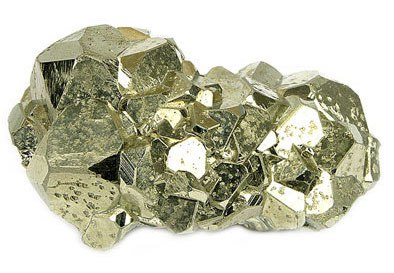
Fig. 1. Pyrite
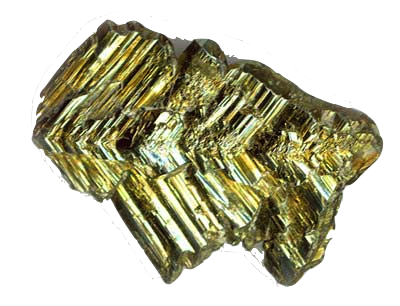
Fig. 2. Marcasite
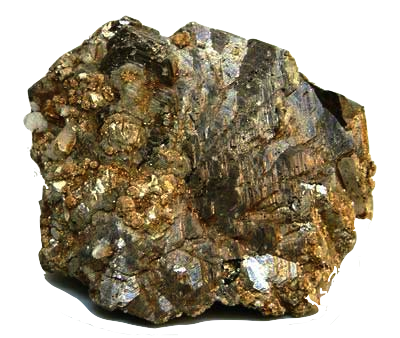
Fig. 3. Pyrrhotite
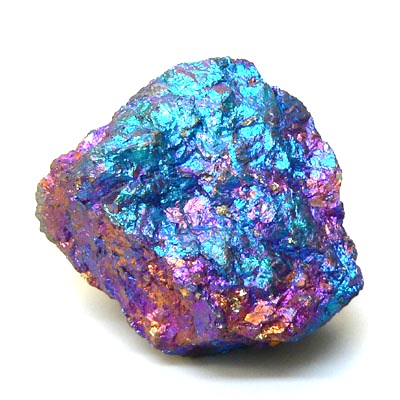
Fig. 4. Chalcopyrite
Sulfide ores are a very important source of non-ferrous metals (nickel, cobalt, copper, zinc, lead, molybdenum, mercury, etc.). Depending on the ratio of sulfides and other minerals in the rock, sulfide ponds are classified as: solid, massive, with a predominance of sulfides, and veined, or disseminated, with a predominance of non-sulfide minerals. Ores can also be monometallic, containing one valuable component, or polymetallic, containing several valuable elements.
Pyrite, chalcopyrite, covellite, sphalerite - are the main minerals of solid and disseminated sulphide ores. In such ores, the gangue is usually represented by quartz and micas.
Reagent modes and flotation enrichment schemes are used for enrichment of sulphide ores . These modes mainly depend on the material composition of the ore, the ratio of mineral forms of ore components, the degree of activation of the ore mineral, as well as the degree of oxidation of sulphides of the elements of interest. Most sulphide ores are characterized by extremely uneven dissemination of minerals, which in turn determines the need to use complex multi-stage enrichment schemes. In the early stages of enrichment, it is necessary to open the intergrowths of the components of interest with the gangue of the main mineral. This is usually achieved by grinding to 50-65%. However, depending on the element being mined, the required opening may not occur with such grinding, which may require additional grinding to 85-95%.
Today, the schemes with separate flotation of sand and sludge fractions with re-flotation of the sand fraction of flotation tailings are becoming increasingly widespread in enrichment of sulphide ores. The scheme of such flotation is shown in Figure 5.


